How to read fault codes (DTCs) (Windows)
GT Flasher can read the Diagnostic Trouble Codes (DTCs) stored by your car's ECU — the fault codes behind a check-engine light — and explain what each one means. Always read the fault codes before flashing or tuning: a car with an unresolved engine fault should be fixed first, not re-programmed.
Read the codes
Connect and identify your car first (see the logging guide for the connect and identification steps). On the Identification screen the DTC panel sits on the right, next to the vehicle's identification details. Unlike the phone apps, nothing is read automatically — click Read DTCs to scan.
A header shows the total count ("N DTCs found") above the list. The DTCs themselves are grouped into labeled sections (Active, Pending, Sporadic) with per-group counts; empty sections are omitted. Each row shows a warning icon that is tinted by category, and rows that commanded the MIL (check-engine lamp) include a small "⚠ Lamp on" badge.
Each stored fault is a row with a warning icon, the code (e.g. P0030) and a short description; click the info icon on a row to see the full explanation.
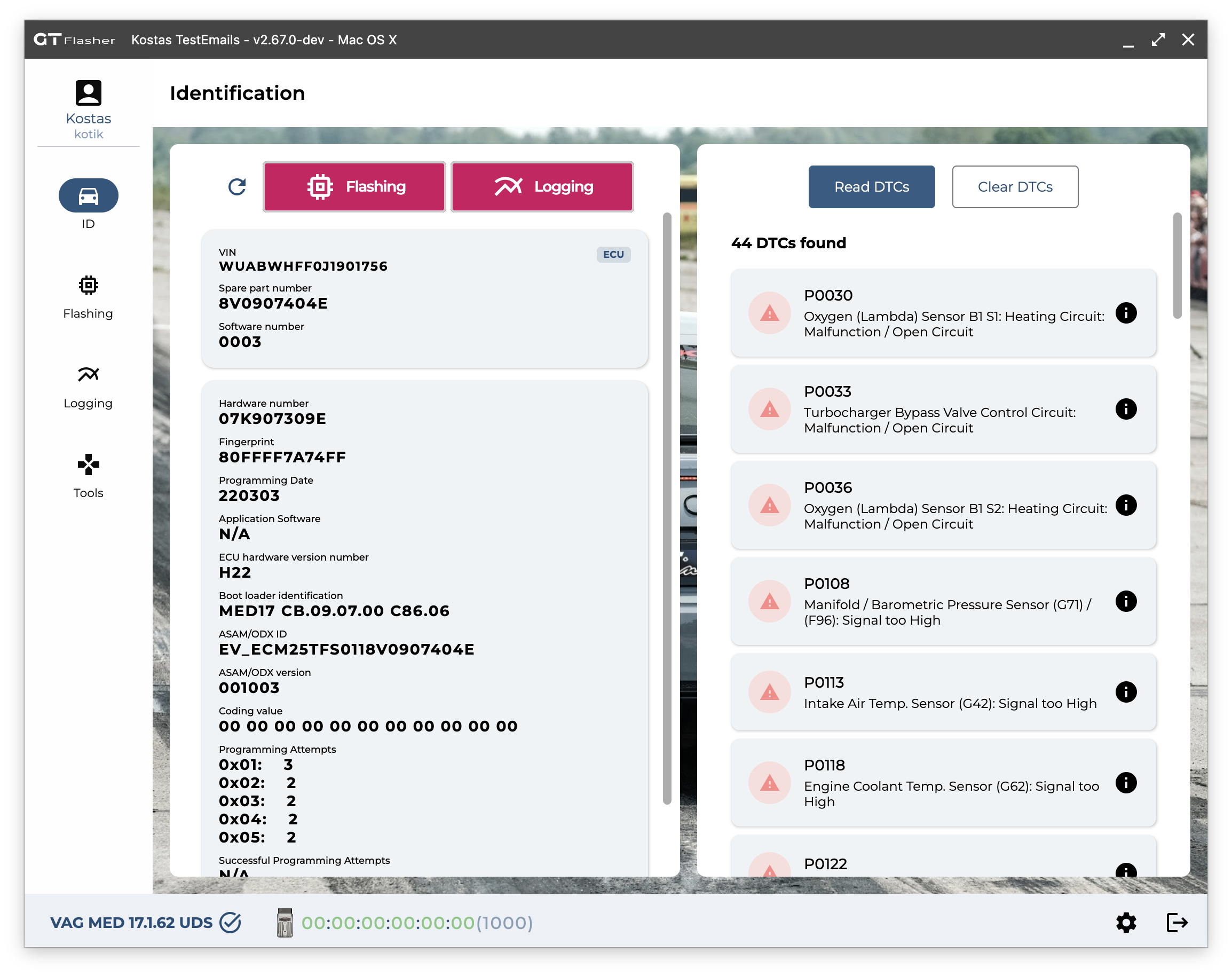
If there are none, you'll see "No DTCs Found" — your vehicle is DTC-free.
Understand a code
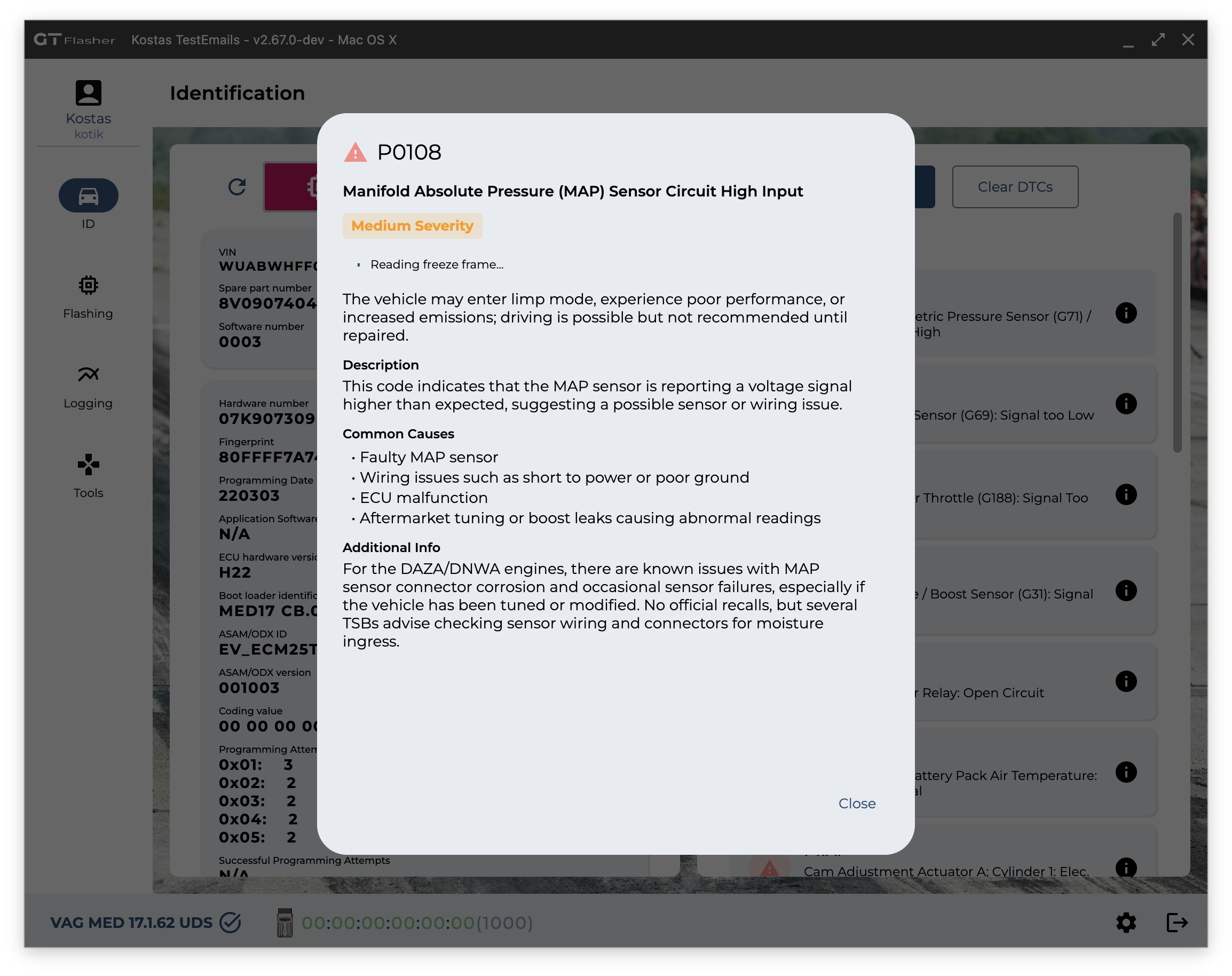
Clicking a code opens a dialog with a plain-language title, a severity badge (how serious it is and whether the car is safe to drive), a short summary, a Description, the Common Causes, and any Additional Info for your engine.
Clearing codes
Clear DTCs erases all stored codes after a confirmation ("Are you sure you want to clear all diagnostic trouble codes? This action cannot be undone." → Clear), then re-reads the list. On some MG1 ECUs the app asks you to keep the ignition on and the engine off while it clears.
Clearing only erases the stored codes — it does not fix the underlying fault. If the cause is still present, the code will come back. Never clear codes just to flash over a real problem; diagnose and repair first.
Good practice before tuning
- Read the codes and resolve anything engine-related before flashing.
- Report codes you don't understand to your mechanic or to support (include your VIN) rather than clearing them blindly.
- A persistent engine fault can limit performance or cause further damage — don't tune a car that isn't healthy.